DevOps basics: the path from zero to production in 2026
Other
Jan. 19, 2026
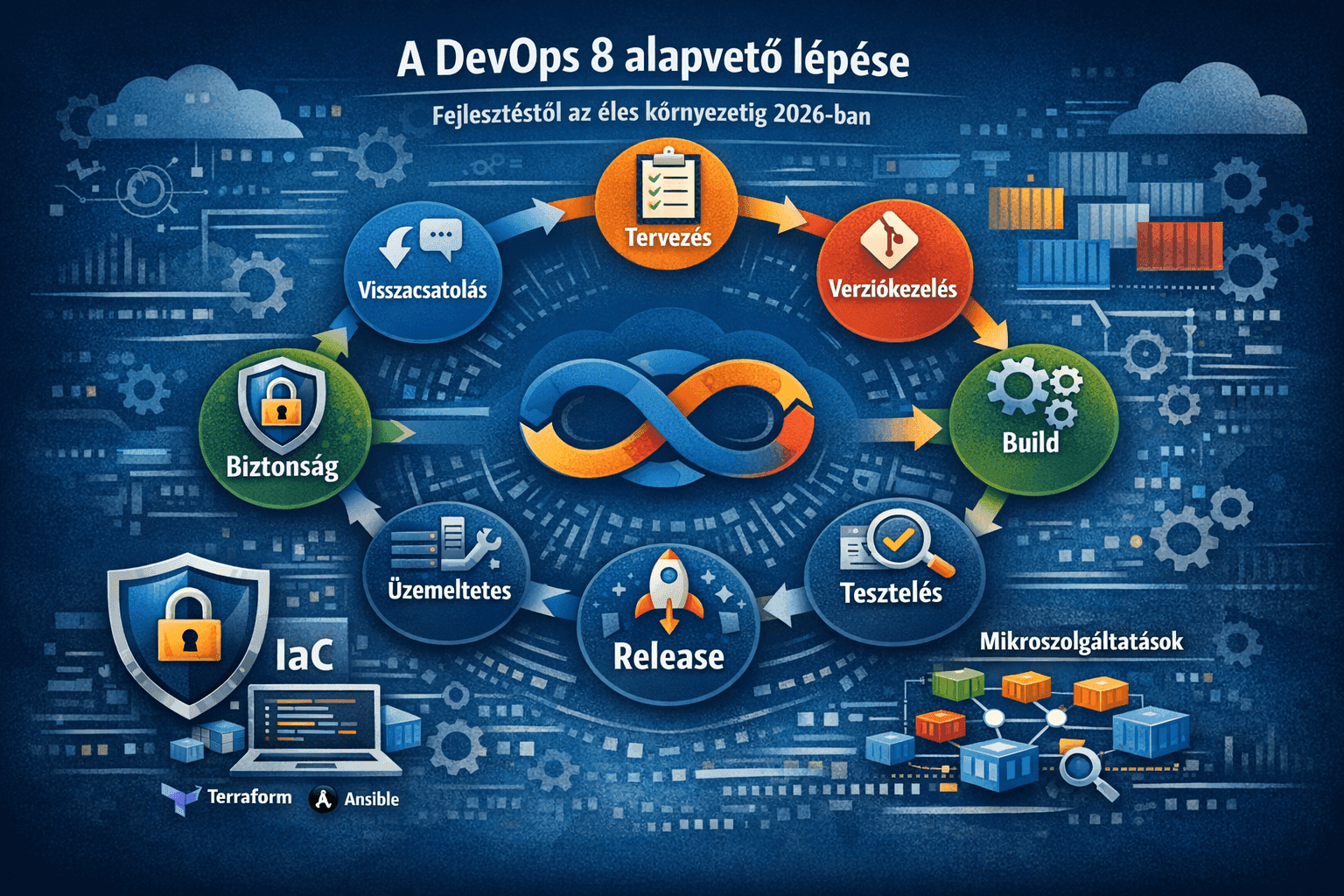
The fundamentals of DevOps are changing the way companies deliver software today. Organizations are achieving more efficient operations and improving developer workflows within their teams [6].
The Road from Zero to Production in 2026 shows how DevOps practices accelerate time to market while increasing stability. Companies that use these methods significantly reduce their recovery time [6]. GitHub Projects helps teams plan software development tasks more efficiently [6]. GitHub Actions creates and runs continuous integration and delivery (CI/CD) workflows [6].
This guide introduces the eight fundamental steps of DevOps and Atlassian's approach to implementation. We examine automation algorithms and explain these concepts in an easy-to-understand way using practical examples. New teams will receive a clear roadmap for implementing DevOps, while experienced teams can further develop their existing systems. Both paths lead from development to production in the 2026 technology environment.
DevOps Environment Development in 2026
Building a DevOps environment goes beyond simply installing tools. Teams need to develop a culture that connects development and operations groups [1].
Version control forms the basis of the pipeline. The installation of Git depends on the operating system:
Linux: Package handlers such as apt or the dnf work best
(For example, on Debian-based systems:sudo apt install git-all) [2]macOS: Using Xcode Command Line Tools or direct download from git-scm.com [2]
Windows: Download from git-scm.com or using the Chocolatey package manager [2]
Configuring Git after installation:
git config --global user.name "Your Name"
git config --global user.email "your_email@example.com"
The next step is to choose your DevOps platform. Azure DevOps offers five core modules:
Boards handles planning,
Repos provides version management,
Pipelines runs CI/CD processes,
Test Plans supports quality assurance,
Artifacts are used to store packages [3].
Registration can also be completed using a Microsoft account or GitHub credentials [4].
Your first project needs four basic components: version control, continuous integration and delivery (CI/CD), infrastructure as code (IaC), and monitoring tools [1]. Start by building these DevOps fundamentals. Complex workflows can wait until later.
The 8 fundamental steps of DevOps, starting from scratch
The DevOps lifecycle progresses through eight interrelated steps that together enable efficient software delivery.
Planning defines the project requirements and sets clear goals.
Version control enables teamwork using Git—multiple developers can work in parallel without overwriting each other's work.
During the build step, a working application is created from the source code. Continuous integration (CI) automatically compiles and packages the code after each commit.
Testing checks that each component works properly and connects correctly to each other using unit and integration tests.
Release management connects development and operations teams. It creates approval levels and automated controls to manage releases to the production environment.
Deployment automates application delivery—Azure DevOps works with virtual machines, containers, and cloud platforms.
Operations ensure that applications run reliably in a live environment. Teams maintain stability, high availability, and prevent outages.
Continuous feedback closes the DevOps cycle. Feedback collected from developers, operations, and users helps identify areas for improvement.
Automation significantly reduces costs in all eight steps. Errors discovered early in the development process cost up to 100 times less to fix than problems detected in a live environment [5].
From development to production: best practices for 2026
Moving code from development to production requires secure pipelines that protect the software supply chain. The average cost of data protection incidents is currently 1,914.37 million forints, which represents a 15% increase over three years [6]. Companies now treat DevSecOps as a fundamental practice rather than a supplementary function.
Security testing accompanies the CI/CD pipeline to identify problems as early as possible.
SAST (Static Application Security Testing) examines the source code,
DAST (Dynamic Application Security Testing) analyzes running applications,
SCA (Software Composition Analysis) checks open source components [7].
These tools uncover vulnerabilities before users even get to them.
Atlassian's open toolchain can be integrated with more than 171 third-party vendors. This allows teams to tailor their environment to their needs while reducing time to market.
Infrastructure as Code (IaC) tools such as Terraform or Ansible keep environments consistent [9]. Configuration drift is less of a problem when infrastructure is also managed in code form.
The microservice-based architecture allows parts of the application to be deployed independently of each other. Each service has its own development, testing, and release schedule [10]. This approach significantly speeds up development cycles.
Monitoring systems must handle metrics, logs, and traces together to provide complete visibility [11]. AI-based automation (AIOps) analyzes operational data in real time and predicts system failures before they occur.
Conclusion
The fundamentals of DevOps have changed significantly by 2026. Teams now deliver software more efficiently and reliably. This guide has shown you the entire journey from zero to production, highlighting how the right DevOps fundamentals accelerate development while maintaining stability.
First, a stable environment must be established. Technical tools are important, but even more important is a culture of collaboration that breaks down traditional development and operations silos. Git remains the foundation of version control. Platforms such as Azure DevOps cover the entire software delivery lifecycle.
The eight-step DevOps framework can be applied to any team, regardless of technical background. Each step has its own role:
planning provides direction,
version management enables collaboration,
builds create executable code,
testing ensures quality,
release management regulates the process,
deployment delivers value,
operations maintain functionality, and
feedback drives continuous improvement.
Security is no longer an optional extra, but a fundamental requirement. Companies are integrating testing into the entire pipeline to prevent costly incidents. This approach, combined with infrastructure as code and microservices, creates systems that can be changed quickly and securely.
The success of DevOps in 2026 will depend primarily on people and processes, not just tools. Organizations that master these fundamentals will deliver software faster and with higher quality, while maintaining the reliability that users expect. Technology is constantly changing, but these principles remain stable and provide a solid foundation for future innovation.
Frequently Asked Questions
Q1. What is DevOps and why is it important in 2026? DevOps is an approach that combines software development and IT operations practices. It will be particularly important in 2026 because it speeds up software delivery, improves system stability and reliability, and significantly reduces recovery time in the event of problems.
Q2. What are the essential tools for setting up a DevOps environment? To set up a DevOps environment, you need a version control system (such as Git), continuous integration and delivery (CI/CD) tools, infrastructure-as-code solutions, and monitoring tools. Platforms such as Azure DevOps offer a comprehensive solution for these areas.
Q3. What are the main steps in the DevOps process? The DevOps process consists of eight main steps: planning, development, building, testing, release, deployment, operation, and learning. These steps form a cyclical process that enables continuous improvement and feedback.
Q4. How can security be integrated into the DevOps process? Integrating security, also known as DevSecOps, will be key in 2026. This involves incorporating security testing into the CI/CD process, including static and dynamic application security testing and software component analysis. The goal is to identify and address vulnerabilities early on.
Q5. What are the benefits of using microservices architecture in DevOps? Microservices architecture allows for independent development, testing, and deployment of application components. This enables faster iterations, better scalability, and flexibility, which is particularly beneficial for DevOps practices in 2026.
References
[1] - https://learn.microsoft.com/hu-hu/training/paths/devops-foundations-core-principles-practices/
[2] - https://devops.com/bridging-the-gap-how-devops-fosters-collaboration-and-rapid-delivery/
[3] - https://git-scm.com/book/en/v2/Getting-Started-Installing-Git
[4] - https://gitprotect.io/blog/how-to-accelerate-software-development-with-github-and-azure-devops/
[5] - https://learn.microsoft.com/en-us/azure/devops/user-guide/sign-up-invite-teammates?view=azure-devops
[6] - https://hyperping.com/blog/devops-feedback-loop
[7] - https://www.testdevlab.com/blog/integrating-security-testing-into-ci-cd-pipeline
[8] - https://www.paloaltonetworks.com/cyberpedia/what-is-ci-cd-security
[9] - https://www.atlassian.com/devops/devops-tools
[10] - https://www.keitaro.com/insights/2024/07/05/scaling-devops-strategies-for-managing-growth-and-complexity/
[11] - https://www.tencentcloud.com/techpedia/101117
[12] - https://www.refontelearning.com/blog/devops-engineering-in-2026-the-ultimate-guide-for-aspiring-professionals