AI Agent Creation 2026: A Step-by-Step Guide for Beginners
AI
Jan. 20, 2026
According to Gartner's latest forecasts, AI agents will independently handle 80% of common customer service issues by 2026, while reducing operating costs by nearly a third. The field of AI agent development is advancing rapidly and will become even more important in the coming years.
PwC's industry analysis points out that 75% of executives believe AI agents will change workplaces more than the internet did in its day. The definition of an AI agent is simple: artificial intelligence systems that perform tasks independently, learn from their experiences, and adapt to changing circumstances. The essence of AI agents' operation is the autonomous cycle, which enables the achievement of complex, multi-step goals.
Creating an AI agent is a practical challenge that provides an opportunity to establish a connection between human intentions and AI capabilities. As technology advances, AI agents are becoming increasingly sophisticated—Perplexity, for example, will evolve into a real-time, source-based knowledge assistant by 2026.
This guide presents practical steps for creating your own AI agent, starting from the beginner level.
What is an AI agent, and how does it differ from other technologies?
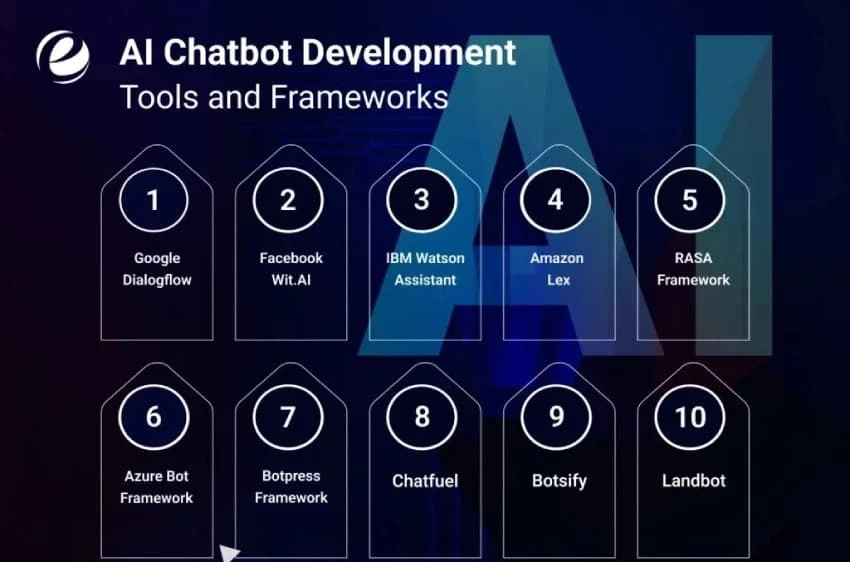
Image Source: Nectar Innovations
AI agent technology is currently one of the most dynamically developing areas of artificial intelligence. It is often confused with chatbots or simple automation solutions, but it is fundamentally different from them. Let's take a look at what makes this technology unique.
AI agent definition simply
An AI agent is an autonomous system that senses its environment, makes decisions, and acts with minimal human intervention. Unlike traditional software, it is a goal-oriented entity that not only reacts but also actively plans and executes tasks.
The four fundamental capabilities of an AI agent:
Observation: Collecting and interpreting environmental data
Decision-making: Analyzing situations and selecting solutions
Action: Using tools and performing operations
Learning: Processing experiences and development
The AI agent perceives, analyzes, and acts while focusing on achieving its set goals.
AI agent vs chatbot vs automation
All three technologies aim to improve efficiency, but their operating principles differ:
Chatbot:
Operates according to a predefined set of rules
Limited to simple, repetitive conversations
Unable to solve complex problems
Static knowledge base, manual maintenance required
Traditional automation:
Fixed rules and work processes
Following pre-programmed logic
Does not adapt to changing conditions
Effective in repetitive, structured tasks
AI agent:
Autonomous decision-making and learning ability
Handling multi-step, complex tasks
Adapts to user preferences and environment
Communicates with external devices and APIs
Proactive operation according to defined goals
The difference lies in complexity, customizability, and adaptability. Chatbots are suitable for simple tasks, while AI agents provide strategic-level support.
What types of AI agents are there?
AI agents can be categorized based on their functions and capabilities:
Reactive agents: Respond to immediate environmental cues without memory or foresight.
Proactive agents: They take initiative, plan, and actively work toward achieving their goals.
Hybrid agents: They combine reactive and proactive elements.
Simple reflex agents: They operate according to a direct stimulus-response mechanism.
Model-based agents: They build an internal world model to inform their decisions.
Goal-oriented agents: They focus on achieving specific target states.
Utility-maximizing agents: They make optimal decisions based on a utility function.
Trainee agents: They develop and improve through experience.
Collaborative agents: They coordinate with other agents or systems.
When creating an AI agent, these types help you choose the right approach for the task at hand. In the next section, we will review the operating mechanisms of intelligent systems.
The basics of how AI agents work
AI agents are complex systems, yet their operation is simple, based on a four-step cycle. This process enables them to perceive their environment, evaluate information, and take targeted action. Let's see how these systems work in practice.
Perception, memory, and decision-making
The first step for an AI agent is to assess its environment. It collects data via sensors, API connections, or user input. Based on this data, it familiarizes itself with its environment and prepares for the next steps.
Effective operation requires a sophisticated memory system. Memory consists of different layers:
Short-term memory: Storage of the current session and recent interactions within the context of a given task or conversation
Long-term memory: Information retention between sessions, making the agent more personal and intelligent
Episodic memory: Retaining specific past events to support future decisions
Semantic memory: Storage of structured factual knowledge
Procedural memory: Retaining skills and learned behaviors
When making decisions, AI agents use large language models (LLMs) and other AI models. They analyze data, weigh options, and then select the optimal course of action. Modern agents don't just follow pre-programmed instructions; they perform real deliberation and goal-oriented planning.
Action and use of tools
After making a decision, the agent implements its plans using various tools. It can use API calls, code execution, or other interfaces. A characteristic feature of AI agents is that they combine multiple tools to perform tasks:
Data collection and analysis
Performing calculations
Creating and running new code
Communication with other software via APIs
Traditional chatbots, on the other hand, only provide predefined responses without any real capacity for action. AI agents are independent entities capable of intervening in their environment and bringing about actual change.
Learning and optimization
The basis for the development of AI agents is their ability to learn. This is achieved in several ways:
Agents use reinforcement learning, where they learn from their previous experiences, refine their performance, and adapt to new information. The learning process is guided by a dynamic reward system that provides continuous feedback.
Using LLMs as a thinking engine, AI agents improve their performance by repeatedly self-evaluating and correcting their output. Their rich memory system helps them store data from past scenarios and build a knowledge base to handle new challenges.
Advanced AI agents have self-reflection capabilities. This allows them to troubleshoot problems and identify future prediction patterns without additional programming. They can use problem generators to test new strategies, collect data, and evaluate results.
It is important to note that most AI agents currently have limited learning capabilities. The learning process often takes place offline, with retraining on large data sets, rather than based on real-time user interactions.
When creating AI agents, it is essential to understand these operating principles in order to create a system that effectively perceives, decides, acts, and learns while performing tasks.
Creating an AI agent step by step
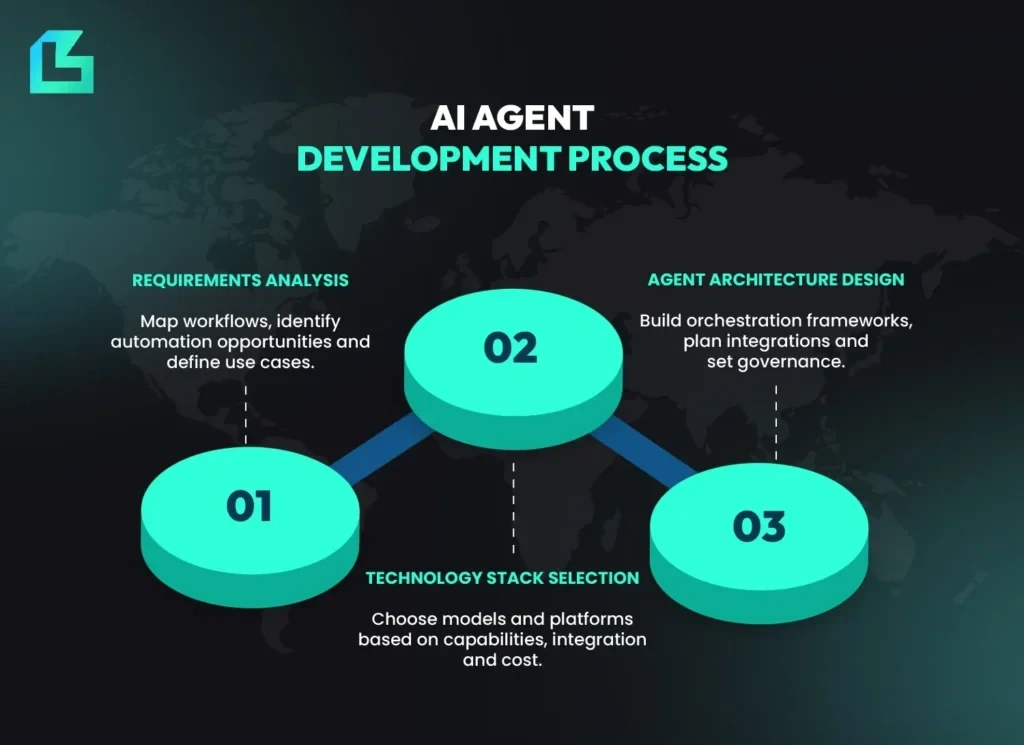
Image Source: Kodexo Labs
AI agent development is a structured process that requires specific steps to be followed. Successful implementation consists of several phases, each of which has an impact on the final result. Let's take a look at a practical approach to creating a working AI agent in 2026.
1. Setting goals and creating a task list
The first step is always to define the exact goal. Based on Virtual Workforce's recommendations, we define the agent's goal and the metrics for measuring success. This ensures the right direction during the development process.
During the planning process, we clarify:
What specific problem does the AI agent solve?
What tasks does it perform?
How do we measure performance?
Create a detailed task list. This reduces the complexity of the project and speeds up feedback cycles. Start with low-risk tasks and gradually expand your capabilities.
2. Choosing a development approach (code vs. no-code)
Choosing the development method is a fundamental decision. It determines the time frame, flexibility, and resource requirements.
Code-based development:
Advantages: Full customization, good scalability, flexibility, seamless integration
Disadvantages: Requires expertise, longer development time, higher costs
No-code platforms:
Advantages: 90% faster development, ease of use, lower cost
Disadvantages: Limited customization, platform dependency, scaling difficulties
A hybrid solution is often optimal: no-code foundations for rapid prototyping, then adding code for specialized features. Tailor your choice to the goals and resources of your project.
3. Designing architecture and components
The AI agent consists of three main components:
Central unit (LLM): The decision-making core with three elements:
Memory: Storing previous interactions
Planning: Breaking down complex tasks into steps
Knowledge base: Access to professional information
Perception: Receiving external data in the form of text, sound, or images.
Tools: Communication with external systems, code execution, API calls.
When designing, it is worth learning about the RAG (Retrieval-Augmented Generation) architecture, which improves knowledge management.
4. Integration of AI models and tools
The next step is to select the appropriate models and tools. You need to decide between LLM-driven prompts, reinforcement learning, or supervised models.
The Microsoft ecosystem offers a wide range of tools, from simple solutions to a comprehensive development environment. Microsoft Copilot Studio and Azure AI Foundry enable rapid prototyping.
Data security requires special attention. Strategies must be developed to protect corporate data and prevent models from using data for learning purposes.
5. Testing and fine-tuning
The final phase involves thorough testing and optimization. We monitor key indicators: accuracy, error rate, time savings, and efficiency.
We plan to have human supervision during the initial phase. As trust grows, we can gradually increase autonomy.
OpenAI Agent Builder allows for direct browser testing, and debug mode helps identify errors. Based on feedback, we continuously tune the agent to achieve its original goals.
Common mistakes and how to avoid them
There are numerous pitfalls awaiting both beginners and experienced developers in AI agent development. Research data shows that 95% of companies implementing AI projects fail to achieve the expected results. Let's examine the most critical mistakes and methods for preventing them.
Too many tools in one agent
Device overload is a common problem in AI agent development. Practical experience shows that with 5+ devices, agent performance deteriorates significantly. Too many data sources and devices confuse the AI agent's decision-making processes, ultimately reducing efficiency.
Prevention methods:
We limit the number of devices per agent, using a multi-agent structure.
Each agent should work with a narrower scope of authority and specialized tools.
Use of a coordinator agent to distribute tasks
Clear separation of device workflows
Inappropriate goal setting
The lack of clear, measurable goals is a critical obstacle. Inaccurate or incomplete instructions cause agents to misinterpret user intent. In multi-agent systems, unclear task definitions and overlapping roles are particularly harmful.
Practical solutions:
Defining clear, measurable goals linked to business needs
Using KPIs to measure agent performance
Documentation of precise specifications and roles
Explicit definition of completion criteria
Disregarding data quality
The biggest mistake in AI agent development is often neglecting data quality. With poor-quality data, models tend to overfit and perform poorly in new situations. Incomplete or incorrect data sets result in poor predictions.
Data quality poses not only technical but also financial risks. Retraining models or collecting additional data can be costly. AI projects typically cost between HUF 117 million and HUF 392 million.
Effective data management strategies:
Establishing robust data channels: cleaning, structuring, continuous monitoring
Collecting diverse, accurate, and relevant data for different scenarios
Application of data augmentation techniques to increase robustness
Ensuring unbiased data with adequate representation of target groups
Monitoring and developing AI agents in practice
Deploying an AI agent is just the beginning. The real business value lies in continuous monitoring and improvement. The three pillars of successful implementation are performance measurement, user feedback processing, and deliberate scaling.
Performance tracking
The evaluation of a functioning AI agent is based on specific metrics. Critical metrics include latency, success rate, and error frequency analysis. Microsoft dashboards provide real-time insight into token usage, response times, and security events.
Basics of practical implementation:
Real-time logging and metric collection (OpenTelemetry, custom logs)
Visual dashboards (Streamlit, Grafana)
Automatic alerts in case of system errors
The LangSmith platform offers comprehensive capabilities for agent monitoring, evaluation, and troubleshooting. The NetWitness AI agent has proven through analysis of more than 2,600 incidents that regular performance monitoring maintains consistent operation.
Incorporating user feedback
According to Upwork's research findings, integrating human feedback significantly improves results compared to purely automated solutions. AI agents deliver 90% cost savings and 88% speed gains, but quality improvements are often found in human-AI collaboration.
Methods for utilizing feedback:
Analyzing user interactions to uncover patterns and trends
Initiating fine-tuning or retraining based on user data
Feedback of successful responses into the system as references
Scaling and adding new features
As trust grows, agents' capabilities and areas of application can be expanded. Dow, a global chemical company, has modernized its billing processes with Microsoft Copilot and agent technologies, which could result in millions in savings in the first year.
Factors to consider when scaling:
Applying MLOps principles for reliable operation
Determining optimal human supervision based on task value
Application of coordinated multi-agent systems in complex processes
Conclusion
We have reached the end of our practical guide to creating AI agents. These autonomous systems go beyond chatbots and traditional automation—they sense their environment, plan, and act independently.
Five essential steps are required to develop a successful AI agent: defining goals, selecting a development method, designing architecture, integrating AI models, and testing. Each stage plays a critical role in the quality of the final result.
Avoiding pitfalls is equally important. Too many tools, unclear goals, or poor data quality can cause serious problems. Starting simple and expanding gradually is the right way to go.
After commissioning, continuous monitoring and development follow. Performance tracking, incorporation of user feedback, and addition of new features maintain optimal operation.
The field of AI agents is undergoing rapid development. They are becoming essential tools in various industries, from cost reduction to efficiency improvement. The technology will be widely available in 2026, with both coding and no-code solutions.
The key to the success of AI agents is the accurate implementation of human intentions and continuous development. This path enables the renewal of business processes and increased competitiveness in the age of artificial intelligence.