Why Do Businesses Fail Without a CRM System?
CRM
Jan. 19, 2026

The use of cloud-based CRM solutions has undergone significant change. In 2008, 12% of companies used these systems – by 2023, this figure had risen to 87%. Effective customer management has now become a basic business requirement.
A CRM system is more than just software—it is a business tool that supports companies in building lasting customer relationships. Its key advantage is the centralized storage of customer information and control over access to it. Optimizing data management has a direct impact on company results and growth opportunities.
This article presents the business role of CRM systems. We examine why they are an essential tool for today's businesses and what operational problems their absence causes. From small business CRM solutions to large enterprise systems, we present the practical steps for successful implementation.
CRM System: What Does It Mean and Why Is It an Essential Business Tool?
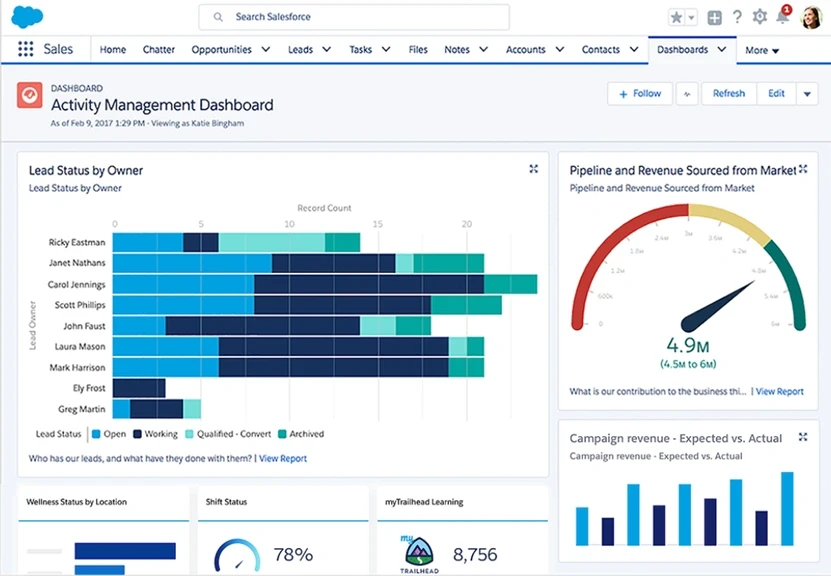
Image Source: BusinessNewsDaily.com
Customer relationship management has become a matter of competitiveness. In the digital environment, the CRM system is at the core of every successful business strategy. However, there is more to this acronym than just software.
Defining a CRM System
Customer Relationship Management refers to customer relationship management. The definition goes beyond the technological tool—it is a strategic approach that serves to build lasting customer relationships.
The system collects customer data from multiple sources: websites, customer contact centers, and social media platforms. The centralized database provides the same information to all departments—sales, marketing, customer service, and finance. Unified data access makes organizational collaboration more efficient.
Modern Business Operations and CRM
Today's CRM platforms offer much more than just a digital address book. They are integrated ecosystems that connect sales, marketing, customer service, and analytics.
Modern CRM functionality:
Implementation of personalized customer service
Automation of routine tasks, freeing up sales staff time
Artificial intelligence-based customer data analysis
Centralized sales opportunity management
Companies are forced to provide a multi-channel, personalized customer experience. CRM systems have become essential tools for marketing, sales, and customer service. When implemented properly, they enable personalized service, reduce communication errors, and ensure transparent sales processes.
Limitations of Excel and Email
As businesses grow, traditional tools become insufficient. Once a certain size is reached, operations become opaque. Using Excel spreadsheets and emails for customer management causes specific problems:
Excel has limitations when it comes to teamwork because sharing up-to-date information is difficult. Searching through large spreadsheets is time-consuming. The CRM system stores data in one place, always with the latest customer information.
The use of CRM goes beyond the question of efficiency. Relationship marketing focuses on retaining existing customers, which is a cost-effective solution—acquiring new customers costs five to six times more than retaining existing ones.
The results of a suitable CRM system: better customer experience, higher customer value, increased sales performance, effective customer retention. These are advantages that cannot be achieved with spreadsheet software.
Lack of CRM: Critical Points in Business Operations
As businesses grow, the question inevitably arises: how long will traditional customer management methods remain effective? Operating without a CRM system causes structural problems in several areas, which directly affect revenue and customer retention.
Scattered Customer Data and Information Chaos
Poor information management makes a company slower, less accurate, and less reliable. An even more serious consequence is the loss of customers. Without a CRM system, customer data is stored in different locations, which causes operational disadvantages. Without a central system, companies find it difficult to store and access customer history.
Modern corporate information and communication systems offer integrated solutions where information flows within a single network. This reduces information loss and communication noise.
Internal Communication Problems
Three different colleagues calling the same customer with three different offers is hardly conducive to building trust. This can easily happen due to a lack of data availability. Incomplete or outdated information and communication technologies are more likely to cause communication noise between the parties.
Organizational communication problems can be categorized as physical, technical, social, and psychological. Each of these affects the quality of customer relationships.
Loss of Customer Loyalty and Missed Business Opportunities
Potential customers are lost because no one follows up with them at the right time. Existing customers leave because they are treated as numbers. According to PWC research data, 32% of customers leave a brand after a single negative experience.
Without a clear tracking process, revenue opportunities slip away. Companies that focus on improving customer experience gain a market advantage and increase employee loyalty. Companies with high brand loyalty achieve revenue growth at twice the rate of their competitors.
Failure to Perform and Delays
One of the most damaging problems for service providers is missed tasks. Follow-ups are forgotten, internal steps are skipped, and customer requests are handled late. These may seem like minor mistakes, but they cause delays, frustration, and lost revenue.
In many organizations, tasks are scattered across emails, chat conversations, meeting notes, and spreadsheets. Without a single authoritative source, tasks compete for attention and are easily overlooked.
Deterioration in Customer Experience Quality
According to EY research, the biggest obstacle is the lack of customer data, which makes it difficult to create a personalized customer experience. Based on Forester research, customer experience-focused companies outperform their underperforming competitors by 80%.
The main reasons for customer churn: negative customer service experiences (40%), transfers between operators (30%), long waiting times (28%). These problems can be addressed with a properly implemented CRM system.
CRM Systems: Concrete Solutions to Business Problems
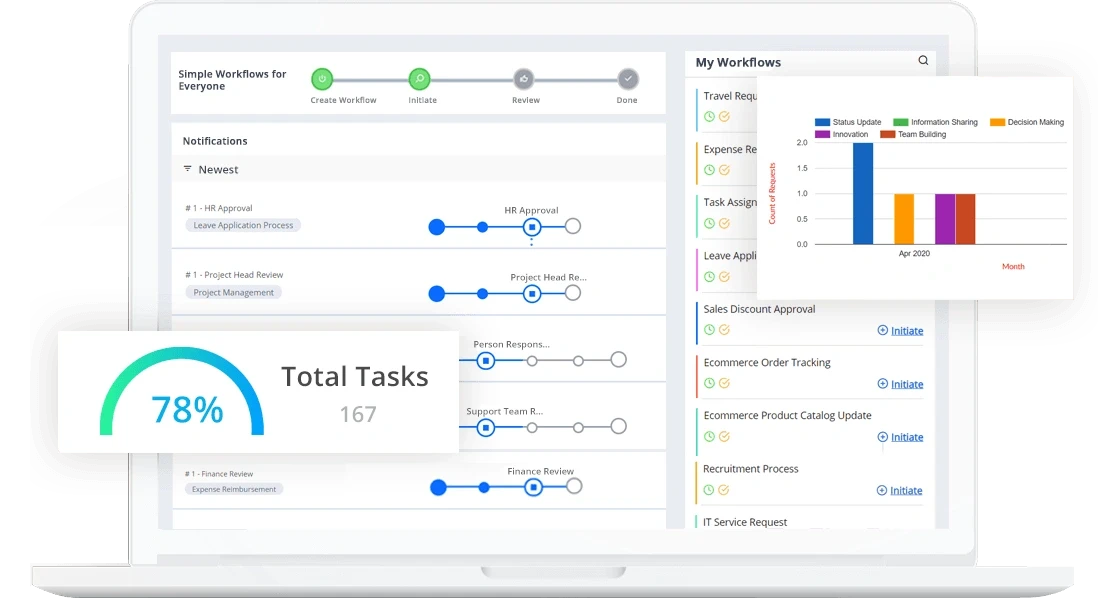
Image Source: Cflow
Today's CRM platforms provide targeted responses to the operational challenges faced by businesses. These systems use practical tools to address previously identified problems.
Automated Processes and Task Tracking
Automating repetitive administrative tasks reduces the risk of errors. Intelligent reminder functions ensure that deadlines are met and tasks are completed. Sales staff spend 520 hours per year on administrative tasks – CRM significantly optimizes this time expenditure.
Unified Database and Quick Accessibility
The system collects customer information from various sources and stores contact details in one place. All members of the organization have access to the same, up-to-date information. Unified data management makes it easier to track purchase history, previous interactions, and processes.
Targeted Campaigns and Personalized Communication
Detailed customer profiles enable us to identify their unique needs, allowing us to provide them with customized services. Marketing campaigns based on the CRM database improve conversion rates and strengthen customer relationships.
Real-Time Reports and Performance Tracking
The system continuously analyzes and reports on company performance. Real-time data clearly shows successful campaigns, lead loss points, and optimization opportunities. KPI indicators support well-founded marketing strategy decisions.
Data Protection Compliance and Security
CRM helps you comply with GDPR regulations. It documents customer consent and records preferred contact methods, while providing technical and organizational protection for personal data. Permission levels determine user access to corporate applications and data.
Implementing a CRM System in Small Businesses
The introduction of CRM is a critical business decision for small businesses. The question is not whether it is necessary, but how long a business can operate effectively without it. As companies grow, managers face digitalization crossroads.
Selecting a CRM System for Small Businesses
Choosing the right CRM is a strategic step that aligns with the needs and financial capabilities of your business. The monthly cost is no more than the price of a mobile service or a tank of gas. Local market adaptation and Hungarian-language support are particularly valuable, especially for teams with limited foreign language skills.
Boxed Solution or Custom Development?
Boxed software is available in packaged form, with monthly or annual fees. Pros: low monthly costs and quick deployment. Cons: limited flexibility and the need for operational compromises. Custom software, on the other hand, is designed for specific business purposes and is fully customized. Despite the development costs and time required, they are often more economical over a 2-3 year period.
Implementation Process and Common Mistakes
Precise definition of objectives forms the basis for successful implementation. Correct data migration and system configuration are key. A common mistake is failing to integrate with partner systems, even though these are key elements of the workflows. Another problem is neglecting change management when business processes are not aligned with system functions.
Staff Training and System Acceptance
User training plays a decisive role in the introduction of a new CRM system. Professional training enables users to learn how to use the system quickly and accurately. Internal communication and convincing colleagues are just as important as the technology itself. Personal training sessions are particularly important, as they are the most effective way of overcoming skepticism.
Daily Operations and CRM Use
CRM coordinates the work of three customer-related departments: sales, marketing, and customer service. The main value of CRM for small businesses lies in the transparency of operations. One of the spectacular results of the system is that salespeople and project managers can rely on the same database. The automation of recurring tasks—invoicing, updating customer records, email campaigns—results in further efficiency gains.
Conclusion
A CRM system is a business tool, not a technological accessory. Excel spreadsheets and email-based customer management become unworkable as the business grows. Companies without CRM struggle with recurring problems: scattered data, communication errors, missed tasks, and declining customer retention.
A properly implemented CRM system brings immediate results in three areas. Centralizing customer information provides an up-to-date database for all employees. Automating routine processes reduces the error rate and frees up operational capacity. Personalized customer communication directly improves retention rates.
For small businesses, the question of off-the-shelf versus custom development is not theoretical. Both solutions are viable if they fit the company's current size and growth plans. The decisive factors are employee acceptance and an appropriate training program.
Today, the question is no longer whether a CRM system is necessary. The ability to manage customer data, track sales processes, and provide professional customer service is a basic market requirement. Failure to invest in such a system leads to a competitive disadvantage. The only question is when and how to implement it.
Frequently Asked Questions
Q1. Why is using a CRM system important for businesses? A CRM system centralizes customer data, automates routine tasks, and enables personalized communication. This improves customer relationships, increases efficiency, and helps retain customers, which is key to business growth and success.
Q2. How does a CRM system help with customer data management? A CRM system stores all customer information in one central location, including contact details, purchase history, and communication processes. This allows all employees to work with up-to-date and accurate data, reducing information loss and improving customer service quality.
Q3. What are the benefits of using a CRM system for small businesses? For small businesses, a CRM system makes operations transparent and trackable. It helps optimize sales processes, manage customer relationships, and automate repetitive tasks. This frees up time and resources while improving the customer experience and increasing revenue.
Q4. What are the most common mistakes when implementing a CRM system? The most common mistakes include inadequate integration of the system with existing workflows, neglecting change management, and inadequate training of employees. When implementing CRM, it is important for the company to focus on aligning business processes with the system and to provide adequate training for its effective use.
Q5. How can you choose the right CRM system for a small business? When choosing the right CRM, it is important to consider the size, needs, and budget of your business. It is worth weighing up the advantages and disadvantages of off-the-shelf and custom-developed solutions. Key considerations may include suitability for local market conditions, Hungarian-language support, and the flexibility of the system in terms of future growth.